
 English
  Українська
  Čeština
 Walking into a specialty coffee shop for the first time can feel disorienting. The menu is written in a language that looks like English but feels like something else entirely — “washed Ethiopian Yirgacheffe, bergamot, peach, jasmine, filter only.” What does that mean? What are you ordering? How do you know if you’ll like it?
Specialty coffee menus are dense with information, and every word on them is intentional. This guide translates the most common elements — origin, process, roast level, brew method, and tasting notes — into plain language so you can walk up to the counter and order exactly what you want.
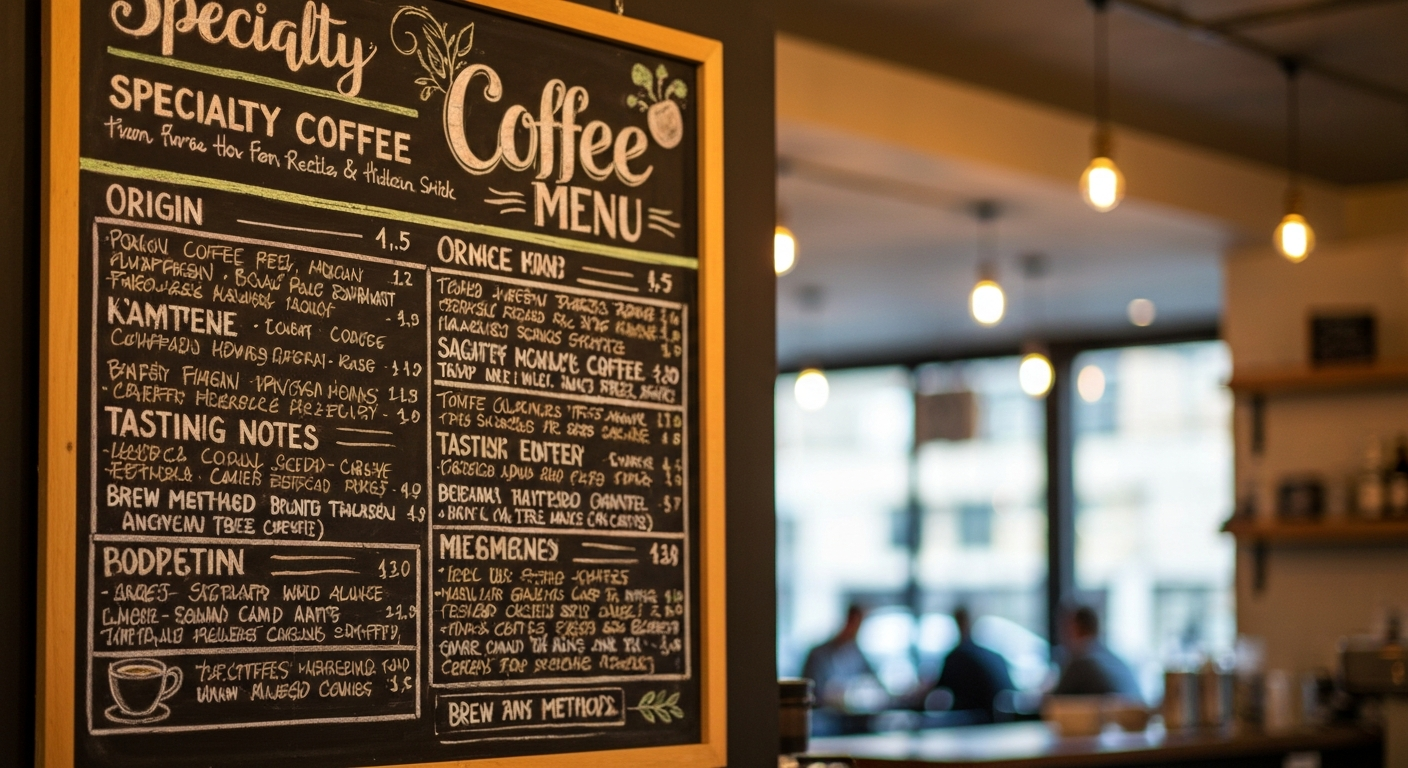
Every element on a specialty menu is a signal — learning to read them turns an overwhelming board into a precise guide to the cup in front of you
Origin: Where the Coffee Comes From
Origin is almost always the first thing listed for a specialty coffee. It tells you where the beans were grown and often hints strongly at the flavour profile you can expect.
Country of origin is the broadest signal. Ethiopian coffees are celebrated for floral and fruit-forward character — jasmine, bergamot, blueberry, stone fruit. Colombian coffees tend toward caramel sweetness, red fruit, and gentle acidity. Brazilian coffees are known for chocolate, nuts, low acidity, and heavy body — dependable and approachable. Kenyan coffees are famous for bright, wine-like acidity with blackcurrant and tomato notes that can be polarising but thrilling. Guatemalan and Costa Rican coffees often land in the middle: clean, sweet, and accessible.
Region within the country narrows the picture. Yirgacheffe (Ethiopia) specifically signals floral and tea-like delicacy. Huila (Colombia) suggests fruit-forward sweetness. Cerrado (Brazil) is associated with the classic nutty-chocolate profile most people recognise as “coffee flavour.”
Single origin vs blend: When a menu lists a specific farm or region, you’re looking at a single-origin coffee — one lot from one producer or cooperative, with traceable provenance. Blends combine beans from multiple origins to achieve a consistent, balanced profile that holds up through milk and heat. Neither is superior — single origins reward exploration; blends deliver reliability. A good espresso blend is typically designed to taste excellent with and without milk; a single-origin filter may be extraordinary black and mediocre with oat milk.
Process: How the Coffee Was Made
Process refers to how the coffee cherry — the fruit that surrounds the bean — was removed before the bean was dried and shipped. This is one of the most powerful flavour variables on the menu, and once you understand it, you’ll be able to predict a huge amount about what’s in the cup.
Washed (also called “natural washed” or “wet process”): The fruit is removed mechanically before the bean is dried. The result is a “clean” cup — brightness and acidity are clearly defined, origin character shines, and the flavour tends to be transparent and precise. If you see “jasmine and bergamot” on an Ethiopian menu, it’s almost certainly washed. Washed coffees reward drinkers who appreciate clarity and terroir.
Natural (also called “dry process”): The whole cherry is dried with the fruit still intact. The fruit sugars and fermentation byproducts absorbed by the bean during drying create a heavier, more fruit-forward, often wine-like or jammy cup. Ethiopian naturals can taste like blueberry jam or strawberry candy — sometimes to a degree that surprises people expecting “coffee.” Brazilian naturals tend toward dark fruit and chocolate. If you love bold, sweet, complex flavours, natural process will appeal to you.
Honey process: A middle path — some of the fruit mucilage is left on the bean during drying. Yellow honey (less mucilage) is closer to washed; red and black honey (more mucilage) approach natural in sweetness and complexity. Honey-processed coffees are often described as smooth and sweet with a round body — approachable for drinkers who find naturals too intense but washed coffees too delicate.
Anaerobic and other experimental processes: You may see terms like “anaerobic natural,” “carbonic maceration,” or “extended fermentation.” These are specialty techniques that manipulate the fermentation environment, often producing distinctive, unusual flavour notes — tropical fruit, fermented sweetness, wine-like complexity. These coffees are polarising by design.
Roast Level: Reading Between the Lines
Most specialty menus don’t explicitly say “light roast” or “dark roast” — they signal roast level through other cues. Understanding these cues helps you avoid ordering a dark espresso blend when you wanted a delicate filter.
Light roast signals: Terms like “filter,” “pour-over,” or “Chemex only” on the menu item. Tasting notes that reference bright fruits, florals, and tea-like character. Origin-forward descriptions (“Ethiopian,” “Kenyan”). Light roasts are often described as acidic, complex, and sometimes described as “challenging” by people expecting traditional coffee flavour.
Medium roast signals: Balanced tasting notes — fruit and chocolate together, caramel and mild acidity. These coffees are described as “versatile” or “works as espresso or filter.” Colombian and Central American origins are commonly medium-roasted.
Dark roast signals: Tasting notes heavy on chocolate, caramel, dark fruit, smoke, and “roast.” Espresso-focused listings. The word “bold” in the description. Italian or French roast as a style descriptor. Dark roasts tend to taste less of the specific origin and more of the roasting process itself.
Brew Method Options
Most specialty cafes offer the same coffee as multiple drinks. Understanding what each means helps you choose the right vehicle for what you want to experience.
Espresso-based drinks: Espresso, flat white, latte, cappuccino, Americano — all start with one or two shots of espresso. If you’re adding milk, the roast level should complement dairy; lighter, more acidic espressos can curdle or become sharp with milk. Many cafes have a dedicated espresso blend designed for milk drinks alongside single-origin options designed to be drunk black.
Filter / batch brew: Usually a large volume brewed in advance by machine. Approachable, consistent, often the cheapest option. Good for cafes that change their filter frequently — it’s a low-commitment way to try something new.
Pour-over (V60, Chemex, Kalita): Made individually to order, often with light-roast single origins. Slower and more expensive than batch brew but showcases a coffee at its most transparent and complex. If you want to taste what makes a particular origin special, pour-over is the answer.
Cold brew and iced options: Cold brew is made over 12–24 hours; iced coffee (or “flash brew”) is hot-brewed directly over ice. Cold brew tastes smooth, sweet, and low-acid. Flash brew retains more acidity and brightness from the original coffee. Some menus mark these clearly; others don’t.
Tasting Notes: What They Mean and Don’t Mean
Tasting notes are the most misunderstood part of a specialty menu. They are not ingredients. There is no blueberry in that Ethiopian coffee and no added chocolate in that Brazilian. The notes describe flavours that occur naturally through the chemistry of the bean, the terroir, and the roast.
Fruity notes (blueberry, peach, mango, apricot): Almost always signal a natural or honey-processed coffee, or a light-roasted washed Ethiopian. These flavours come from fermentation compounds and bean chemistry — they’re genuine and verifiable once you taste for them.
Floral notes (jasmine, bergamot, rose, elderflower): The signature of lightly roasted Ethiopian washed coffees. These delicate aromatics are heat-sensitive and disappear with darker roasting.
Chocolatey notes (dark chocolate, milk chocolate, cocoa): Common in Brazilian, Guatemalan, and dark-roasted coffees. The Maillard reaction during roasting produces these compounds — they’re roast-derived as much as origin-derived.
Nutty notes (almond, hazelnut, walnut): Typically medium to dark roast, most common in Brazilian and Central American coffees. Approachable and crowd-pleasing.
Caramel, toffee, brown sugar: Roast-forward sweetness; these notes dominate in medium roasts. Very accessible for people new to specialty coffee.
Wine-like, fermented, jammy: Natural process signals, often Ethiopian or Yemeni naturals. Can be intensely fruity or slightly funky depending on your palate.
Bright, clean, tea-like: Washed light roasts — especially East African. If you usually drink green or white tea and want similar delicacy in your coffee, look for these descriptors.
A Simple Decision Framework
If you’re still not sure what to order, ask yourself two questions:
- Do I want milk or not? If yes, choose an espresso-based drink with a blend or medium roast. If no, ask for the pour-over or filter of the day.
- Do I want something familiar or something adventurous? Familiar: chocolatey or nutty notes, blend or Brazilian origin, medium roast. Adventurous: fruity or floral notes, Ethiopian or Kenyan single origin, light roast, filter or pour-over.
Most good baristas will happily guide you. Specialty coffee culture, at its best, is about sharing what’s in the cup — not gatekeeping it.
Where to Go Next
- Coffee Freshness Guide — why roast date matters as much as origin
- Grind Size Guide — understanding what the barista is doing behind the counter
- Arabica vs Robusta — the foundational species distinction behind every menu
Enjoyed this article?
Get new coffee guides delivered to your inbox.
No spam, ever. Unsubscribe anytime.
Related Topics
The Coffee Belt
The Coffee Belt spans the tropics between Cancer and Capricorn, home to all 70 coffee-growing nations and every Arabica and Robusta variety on Earth.
getting-startedThe Legend of Kaldi — Coffee's Ethiopian Origins
The story of Kaldi the goat-herder, the earliest written records of coffee in Ethiopia and Yemen, and the Kaffa region as the birthplace of Coffea arabica.
getting-startedWhat is Coffee Brewing?
Coffee brewing extracts soluble flavour from roasted grounds using water — and grind size, temperature, time, and ratio all determine whether the cup sings or disappoints.
getting-startedWhat is Coffee Origin?
Coffee origin is the story of place — altitude, soil, and climate shape every flavour note. From Ethiopian florals to Colombian caramel and Kenyan citrus.