
 English
  Українська
  Čeština
 The Moka pot is one of the most widely owned coffee brewers in the world. In Italy — where it was invented — roughly 9 in 10 households own one. It’s inexpensive, nearly indestructible, and capable of producing a strong, rich, deeply satisfying cup of coffee. It’s also one of the most consistently misused brewers in the world, responsible for an enormous quantity of bitter, acrid, scorched coffee that puts people off strong coffee entirely. Used correctly, a Moka pot is a genuinely excellent brewer.
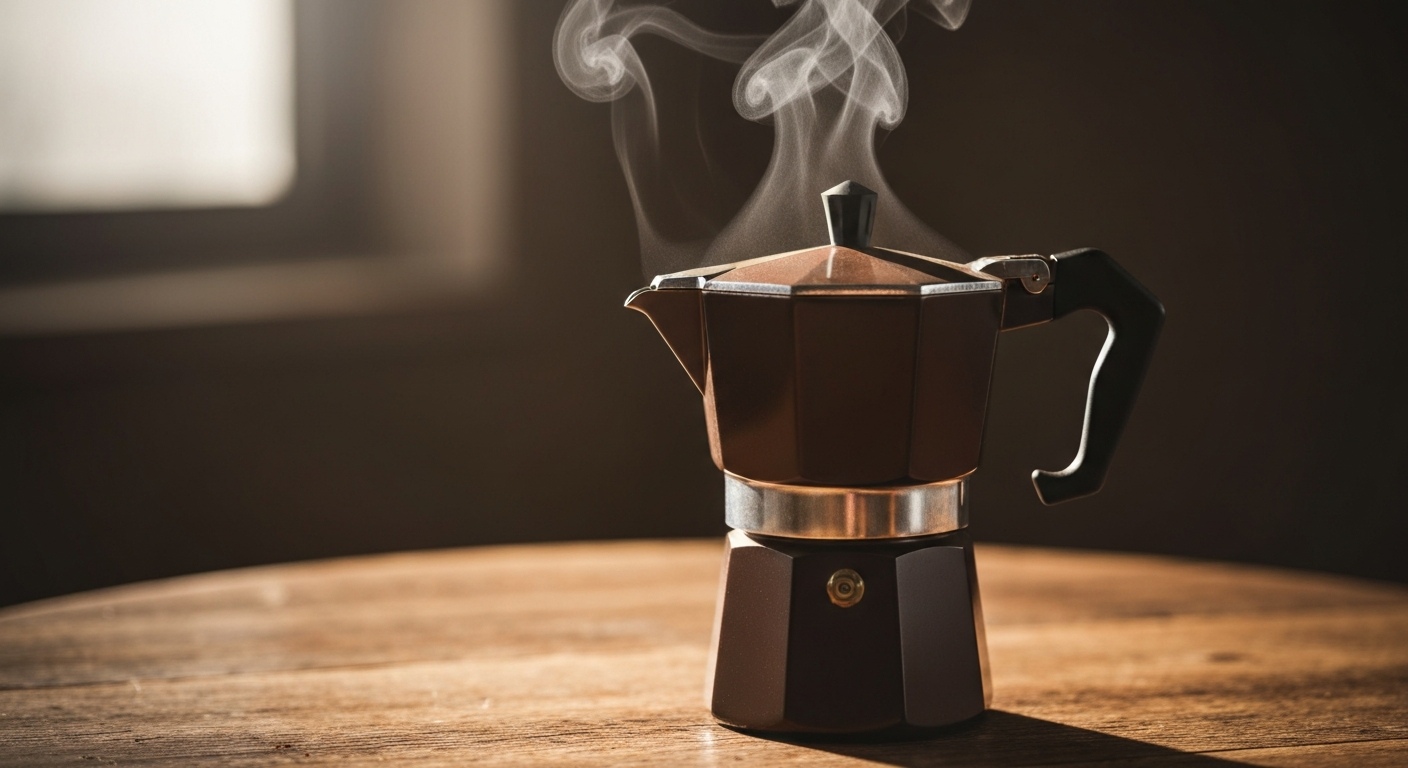
The Moka pot builds pressure from steam to push water through the coffee — a stovetop method that’s closer to filter coffee than true espresso
Alfonso Bialetti and the Stovetop Revolution
Alfonso Bialetti patented the original Moka pot in 1933, reportedly inspired by the design of a laundry device that used soapy water and pressure. His octagonal aluminium brewer — the Moka Express — became an Italian design icon. After World War II, his son Renato Bialetti turned it into a manufacturing enterprise, and the famous cartoon man with the moustache became one of the most recognised logos in European consumer products.
Today Bialetti remains the best-known brand, but dozens of manufacturers produce Moka pots in aluminium, stainless steel, and other materials. The design has changed remarkably little in 90 years. Three chambers, a filter basket, a rubber gasket, and a pressure valve — the same parts Alfonso Bialetti assembled in the early 1930s.
How Pressure Works in a Moka Pot
The Moka pot has three chambers stacked vertically. The bottom chamber holds water. The middle is a filter basket that holds ground coffee. The top chamber is where the finished brew collects.
When the bottom chamber is heated, water begins to boil and produce steam. The steam creates pressure — enough to push the still-liquid water beneath it upward, through the coffee grounds, and up through the spout into the top chamber. The pressure involved is roughly 1–2 bar: more than atmospheric pressure, but significantly less than an espresso machine’s 9 bar.
The safety valve on the side of the bottom chamber is a critical component. If the chamber is overfilled with water (above the valve), or if the coffee is packed so tightly that water can’t pass through, pressure builds to dangerous levels. The valve releases excess pressure to prevent the Moka pot from becoming a hazard. This is the primary reason you should never tamp the grounds or overfill the water chamber.
Why It’s Not Espresso
The Moka pot is frequently marketed as producing “espresso-style” coffee, and the terminology is understandable — the coffee is strong and concentrated compared to drip filter. But espresso requires 9 bar of pressure consistently maintained throughout extraction, which is what espresso machines provide. The Moka pot’s 1–2 bar produces a different drink: similar in strength and character, but with a different texture, less crema, and a different extraction profile.
This isn’t a criticism. Moka pot coffee is excellent on its own terms. The confusion matters mainly when people try to apply espresso techniques (fine grind, tamping, high heat) to the Moka pot and wonder why the results are bitter and acrid. Espresso rules do not apply here.
The Correct Fill Level
Fill the bottom chamber with water up to just below the safety valve — never above it. Most Moka pots have a visible line or the valve itself acts as a guide. This is not a variable to adjust for strength; it’s a safety parameter. The amount of water in the bottom chamber is fixed by the design of the pot.
Pre-heating the water in a kettle before adding it to the chamber speeds up the brewing process and reduces the time the coffee spends in contact with the hot metal, which can contribute to metallic or burnt flavours. This is a worthwhile habit, particularly if you’re using an aluminium Moka pot.
Grind Size
Medium-fine is the correct grind for a Moka pot — finer than drip filter, but coarser than espresso. A good visual reference: it should feel slightly sandy between your fingers, not powdery.
Grinding too fine causes two problems: it makes the brew process very slow (water struggles to push through), which overheats the coffee and causes bitterness; and it can cause pressure to build to levels where the safety valve triggers. Grinding too coarse produces a weak, thin cup.
Do not tamp the grounds. Fill the basket to the rim, level it gently, and leave it loose. Tamping, like with espresso, creates resistance that causes the same problems as too-fine a grind.
Heat Management
Low to medium heat is the rule. This is the most common mistake people make with the Moka pot: cranking the heat to maximum and walking away.
High heat causes water to rush through the grounds too quickly and at too high a temperature, producing harsh, over-extracted coffee with prominent bitterness. It also overheats the metal of the top chamber, which scorches the coffee as it arrives. The goal is a slow, steady flow of coffee up through the spout — not a violent gurgle.
Start on medium-low heat. Keep the lid open so you can watch the coffee as it rises. You want to see a dark, steady stream of coffee entering the top chamber. If it’s sputtering or gurgling aggressively, the heat is too high.
The Moment to Remove from Heat
The critical moment is when the coffee in the top chamber begins to change colour — from dark brown to a paler, golden-tan — and you start to hear a hissing or bubbling sound. This is the point where the liquid water in the bottom chamber has been mostly exhausted and steam is starting to push through. Coffee extracted this late in the process is harsh and bitter.
Remove the Moka pot from the heat at the first sign of hissing. Place the bottom of the pot briefly under cold running water or on a cold damp cloth to stop the extraction immediately. Serve right away.
Common Mistakes
Using boiling water in the chamber from the start: Pre-heating water in a kettle to just below boiling (around 90°C) is better than starting with cold water. Cold water means a longer heat-up time, which overheats the metal and coffee.
Leaving it on the heat too long: The hissing sound is a warning, not a normal part of the process. Remove from heat at first gurgle.
Packing too much or too little coffee: Fill the basket level with the rim, unpacked. Don’t overfill or compress.
Washing with soap: Soap strips the seasoned oils from the interior of an aluminium Moka pot and can leave residue that affects flavour. Rinse with hot water only. If the pot smells or tastes metallic after cleaning, run a few “throw-away” brews through it before drinking.
Moka Pot as an Espresso Gateway
Despite not being espresso, the Moka pot produces coffee strong enough to use as a base for milk drinks. Moka coffee with steamed or frothed milk produces something close to a cappuccino in character — not identical, but deeply satisfying. In many Italian homes, this is how the Moka pot is used daily: strong coffee, a little hot milk, a spoonful of sugar.
For those curious about espresso but not ready to invest in a machine, the Moka pot is also an excellent way to understand what concentrated coffee extraction tastes like — and how brewing variables like grind size and heat affect the cup.
Where to Go Next
- Grind Size Guide — getting Moka pot grind exactly right makes a large difference
- AeroPress Complete Brewing Guide — another beginner-friendly brewer with similar strength potential
- Coffee Freshness Guide — fresher beans extract more cleanly in a Moka pot
Enjoyed this article?
Get new coffee guides delivered to your inbox.
No spam, ever. Unsubscribe anytime.
Related Topics
Pour Over
Pour-over is a manual coffee brewing method using paper filters and controlled water flow, producing clean, nuanced cups that reveal single-origin character.
brewingHario V60 Pour Over
The iconic cone-shaped dripper that rewards technique and precision — a guide to pulse pouring, recipes, and getting the most from the V60.
brewingCoffee Cupping
The universal language of coffee evaluation — how professionals cup coffee using SCA standards, and how you can apply the same protocol at home to sharpen your palate.
brewingChemex
A design icon since 1941, the Chemex uses thick bonded filters to produce an ultra-clean, bright cup that highlights the delicate nuances of light-roasted coffee.