 English
  Українська
  Čeština
 The siphon coffee brewer — also called a vacuum brewer or vac pot — is the most visually dramatic way to make coffee. Water climbs upward through a tube, mixes with grounds in a glass globe, then drops back down in a clean cascade as the brew finishes. It looks like a chemistry experiment, and in a meaningful sense, it is. It also produces some of the clearest, most complex cups of coffee you can make at home.
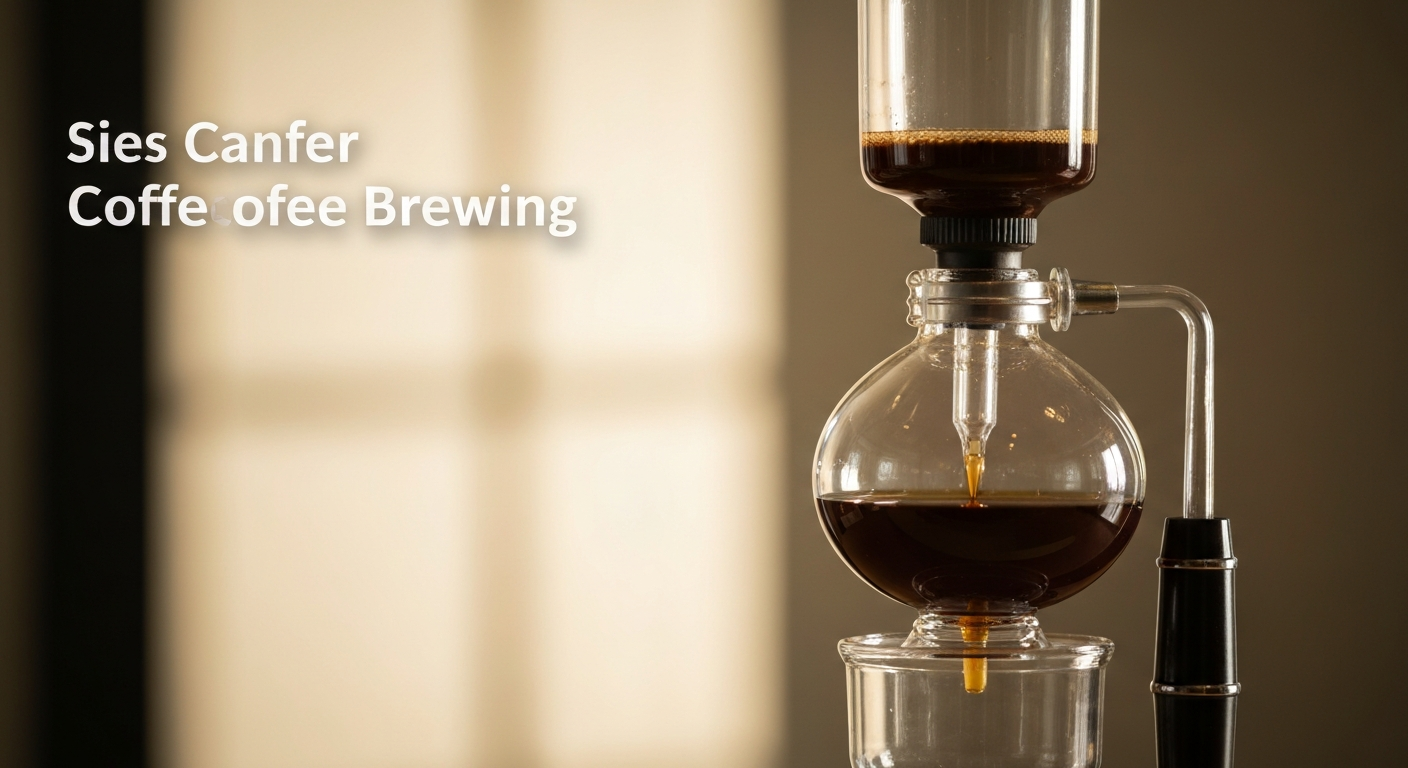
The siphon’s two-chamber design uses vapor pressure to move water upward and a vacuum to pull the finished brew back down
A History Rooted in Science
The siphon brewer was invented in the 1830s — before espresso machines, before drip filters, and long before anyone called coffee “specialty.” Loeff of Berlin is often credited with an early patent around 1830, and Scottish marine engineer Robert Napier refined the design into something more practical by 1840. The device spread quickly through European households, where its theatrical appearance made it as much a parlour showpiece as a coffee appliance.
By the early twentieth century, the siphon fell out of fashion as simpler percolators and drip machines took over. Japan preserved the tradition: kissaten cafés — the quiet, meticulous coffee bars that defined Japanese café culture — kept siphon brewing alive through the mid-century decades. The Japanese siphon tradition is now widely considered the most technically refined expression of the method, and many modern specialty coffee bars draw directly on it.
The Physics: How Water Moves Upward
Understanding why the siphon works makes it easier to use and troubleshoot.
When you apply heat to water in the bottom chamber, it begins to vaporise. The expanding steam creates pressure that pushes the liquid water upward through the connecting tube and into the upper chamber, where it mixes with the coffee grounds. The water doesn’t boil away — the pressure is just enough to displace it upward while most of the water stays liquid.
When you remove the heat source, the steam in the lower chamber cools rapidly and contracts. This creates a partial vacuum — pressure lower than atmospheric — that pulls the brewed coffee back down through the filter and into the lower chamber, leaving the spent grounds behind in the upper globe.
The result: a clean, sediment-free cup in the lower chamber, and visually spectacular brewing theatre in between.
Equipment
The Brewer
Siphon brewers come in two main configurations:
Tabletop stand models hold the two chambers in a vertical frame with space for a burner beneath. These are more stable and easier to work with, particularly for beginners. Most specialty coffee bar siphons are tabletop models.
Stovetop models sit directly on a gas or electric hob, similar to a Moka pot in concept. They’re less common in specialty coffee settings but more accessible for home use — no separate burner required.
Most siphon chambers are glass — borosilicate glass, the same heat-resistant material used in laboratory equipment. This lets you see exactly what’s happening but requires careful handling. Metal (typically stainless steel) and ceramic models exist and are more durable, though you lose visibility into the brewing process.
The Heat Source
Tabletop models use one of three burner types: alcohol burners (traditional, easy to find, no temperature control), butane burners (better heat output and some control), and halogen or induction beam heaters (used in high-end café settings for precise temperature management). For home use, an alcohol burner is perfectly adequate. A stovetop model on low gas works similarly.
Filters
The filter sits in the tube that connects the two chambers and is what keeps grounds in the upper globe while liquid passes through.
Cloth filters are the traditional choice and what most Japanese siphon practitioners use. They produce a rich, round cup with slightly more body than paper, and they’re reusable — though they require rinsing immediately after use and occasional boiling to remove coffee oils that accumulate over time.
Paper filters are more convenient and produce a slightly cleaner, brighter cup with less body. They’re single-use and don’t require the maintenance that cloth does.
Metal filters are less common but reusable and relatively low-maintenance. They allow the most oils through, producing the fullest body — though the cup may have some sediment.
Step-by-Step Recipe
Equipment: Siphon brewer with burner, scale, timer, stirring paddle or spoon
Recipe:
- Coffee: 20g, medium grind (similar to a drip filter, slightly finer)
- Water: 300ml at approximately 93°C to start
- Total brew time: approximately 3–4 minutes
Method:
- Pre-heat 300ml of water separately (a kettle works). Pour it into the lower chamber. Pre-heating speeds the process and reduces the time the coffee spends at high temperature.
- Attach the filter to the tube in the upper chamber and connect it loosely to the lower chamber.
- Light your burner and place it under the lower chamber. As the water heats, it will begin to rise through the tube.
- Once most of the water has risen to the upper chamber (this takes 2–3 minutes), add 20g of ground coffee.
- Stir gently to ensure all grounds are saturated. Start your timer.
- Maintain the heat for 60–90 seconds, stirring once or twice to keep extraction even. The temperature in the upper chamber should stabilise around 90–93°C.
- Remove the heat source. The brew will begin descending within 30–60 seconds. Do not stir during this phase.
- Once the brew has fully descended — the upper chamber will be almost empty — carefully remove the upper globe and serve from the lower chamber.
Why Siphon Produces Unusually Clean Cups
The siphon’s clarity comes from a combination of factors. First, the filter (particularly cloth or paper) removes most suspended particles and oils. Second, the precise temperature control available with a good burner prevents the uneven, high-heat extraction that produces bitterness. Third, the vacuum draw at the end pulls coffee cleanly through the filter rather than letting it drip by gravity, which can lead to uneven passage.
The result often highlights delicate flavour notes — florals, stone fruits, bright acidity — that more forgiving methods (French press, AeroPress) might mute. Coffees with natural processing or complex terroir characteristics tend to perform particularly well in a siphon.
Cleaning and Maintenance
The lower chamber and upper globe should be rinsed with hot water immediately after use. Avoid soap in the upper globe — coffee oils will season the glass over time in a way that’s desirable, and soap disrupts this. Rinse thoroughly and air dry.
If using a cloth filter, rinse it thoroughly under hot water immediately after each brew. Every week or two (depending on use), boil the cloth filter in clean water for a few minutes to remove accumulated oils. A cloth filter that isn’t maintained regularly will contribute off-flavours.
Paper filters are discarded after each use. Rinse the filter holder before inserting a new one.
Is a Siphon Worth It?
A siphon demands more attention and cleanup than most brewers. The setup takes longer, the equipment is fragile, and the brewing process requires you to stay present throughout. If you want a brewer you can set and walk away from, look elsewhere.
But if you enjoy the ritual of brewing — if the process itself is part of why you make coffee at home — the siphon offers something no other method does: a visible, physical enactment of the science of extraction. The cup it produces at its best is among the cleanest and most complex you can make without professional equipment.
Where to Go Next
- Chemex Brewing Guide — another filter method that prizes clarity
- Coffee Extraction Explained — the science behind what the siphon is doing
- Grind Size Guide — siphon grind sits in a specific and important range
Enjoyed this article?
Get new coffee guides delivered to your inbox.
No spam, ever. Unsubscribe anytime.
Related Topics
Pour Over
Pour-over is a manual coffee brewing method using paper filters and controlled water flow, producing clean, nuanced cups that reveal single-origin character.
brewingHario V60 Pour Over
The iconic cone-shaped dripper that rewards technique and precision — a guide to pulse pouring, recipes, and getting the most from the V60.
brewingCoffee Cupping
The universal language of coffee evaluation — how professionals cup coffee using SCA standards, and how you can apply the same protocol at home to sharpen your palate.
brewingChemex
A design icon since 1941, the Chemex uses thick bonded filters to produce an ultra-clean, bright cup that highlights the delicate nuances of light-roasted coffee.